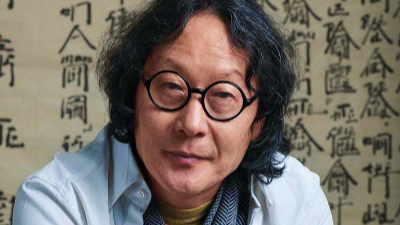
Xu Bing
Introduction
Xu Bing is an internationally acclaimed Chinese artist known for his innovative exploration of language, culture, and communication through art. His works often challenge conventional perceptions of language, exploring its role in human civilization and contemporary society. Over a career spanning more than four decades, Xu Bing has captivated audiences worldwide with his engaging installations, calligraphic re-inventions, and multimedia exhibitions. His art often reflects on social phenomena, technological advancements, and the evolving nature of communication, urging viewers to reconsider their understanding of language and meaning.
Early Life and Education
Xu Bing was born in Chongqing, China, in 1955. His formative years were marked by the socio-political upheavals of the "cultural revolution" (1966-76), a period that later profoundly influenced his artistic perspective. During this time, Xu was exposed to a vast array of printed materials, fostering an early interest in the form and function of language. Xu's mother worked at the library of Peking University, giving him access to numerous books on printing history, typeface design, and other literary subjects. This exposure instilled in him a deep appreciation for the visual aspects of language and the cultural significance embedded within written characters.
In 1977, Xu Bing pursued formal art education at the Central Academy of Fine Arts (CAFA) in Beijing, one of the most prestigious art institutions in China. He graduated in 1981 with a degree in printmaking. His education at CAFA provided him with a strong foundation in traditional Chinese art techniques, which he later combined with modern and conceptual approaches in his subsequent work. Xu remained at CAFA as a faculty member, where he continued to develop his unique artistic style and thematic focus on language and communication.
Career
Initial Artistic Endeavors
Xu Bing's early career was characterized by a deep engagement with traditional Chinese art forms, particularly woodcut printmaking. However, his work also displayed a willingness to experiment and push boundaries, reflecting a desire to explore the intersections of tradition and modernity. One of his first significant projects was the large-scale installation Book from the Sky, which he began in the late 1980s. This ambitious work consisted of thousands of invented Chinese characters, meticulously carved into woodblocks and printed in the style of classical Chinese texts. The installation challenged viewers' assumptions about language and meaning, as the characters, though visually familiar, were entirely nonsensical.
Breakthrough Works
Book from the Sky marked Xu Bing's international breakthrough, earning him widespread acclaim for its conceptual depth and technical mastery. The work was first exhibited in Beijing in 1988 and later showcased at the University of Wisconsin in 1991, where it garnered significant attention in the United States. The installation's impact was profound, sparking discussions on contemporary art and language both in China and abroad. It established Xu Bing as a leading figure in the global art scene and set the stage for his subsequent explorations of language and meaning.
Another pivotal work in Xu Bing's career was Ghosts Pounding on the Wall, an installation featuring prints created from Great Wall bricks. This piece further exemplified Xu's ability to blend traditional and contemporary elements, utilizing historical imagery to comment on modern cultural and social issues. His works during this period often explored themes of identity, tradition, and globalization, reflecting the broader cultural shifts occurring in China and around the world.
International Recognition
Xu Bing's innovative approach to art and language quickly gained him international recognition, leading to invitations to exhibit his work at prestigious institutions such as the British Museum, the Museum of Modern Art, and the Metropolitan Museum of Art. His ability to transcend cultural boundaries through art resonated with audiences worldwide, earning him numerous awards and honors throughout his career. Xu's unique artistic vision and conceptual rigor have made him a prominent figure in the global art community, influencing both artists and thinkers across various disciplines.
Artistic Style and Themes
Calligraphy and Language
Central to Xu Bing's artistic practice is his exploration of language and calligraphy. His work frequently examines the form and function of written characters, challenging traditional notions of meaning and communication. Xu's Square Word Calligraphy exemplifies this approach, where he creates calligraphic compositions using the Latin alphabet arranged to resemble Chinese characters. This inventive blend of languages invites viewers to reconsider their understanding of written forms and the cultural assumptions underlying them.
Xu's fascination with language extends to his exploration of symbols and icons in contemporary society. In The Book from the Ground, Xu employs modern symbols and logos to narrate a story, creating a universal language accessible to anyone. This work contrasts with Book from the Sky, highlighting Xu's ongoing interest in the evolving nature of language and its role in human interaction.
Cultural Commentary
Xu Bing's art often serves as a commentary on cultural and social issues, reflecting his keen awareness of the changing dynamics of contemporary society. His works frequently address themes of globalization, technology, and the intersection of tradition and modernity. Through his installations and exhibitions, Xu encourages viewers to question their perceptions of culture and identity, challenging established norms and encouraging new perspectives.
In recent years, Xu's work has increasingly focused on the impact of technology on communication and culture. His exhibition The World Picture: Xu Bing's Dragonfly Eyes delves into the pervasive nature of images and information in the digital age, guiding audiences through a complex landscape of visual stimuli. This exploration of technology's influence on society underscores Xu's commitment to examining contemporary issues through art.
Notable Works
Book from the Sky
Book from the Sky remains one of Xu Bing's most iconic and influential works. This large-scale installation features thousands of invented Chinese characters, meticulously carved and printed in the style of classical Chinese texts. The characters, although visually familiar, are entirely nonsensical, prompting viewers to question their assumptions about language and meaning. First exhibited in Beijing in 1987, the work garnered international acclaim and established Xu Bing as a leading figure in contemporary art.
The Living Word
Another notable work by Xu Bing is The Living Word, an installation that explores the relationship between language and nature. The piece consists of a series of characters representing the Chinese word for "bird," arranged to appear as if they are in flight. This work reflects Xu's interest in the dynamic nature of language and its connection to the natural world, highlighting the tension between human constructs and the organic environment.
Exhibitions and Collaborations
Xu Bing's work has been exhibited in numerous prestigious venues around the world, including the British Museum, the Museum of Modern Art, the Metropolitan Museum of Art, and the Guggenheim Museum. His exhibitions often feature a diverse range of mediums, from traditional printmaking to multimedia installations, showcasing his versatility and innovative approach to art. In addition to solo exhibitions, Xu has participated in collaborative projects with other artists and cultural institutions, further expanding his influence and reach.
One notable collaboration was with Château Mouton Rothschild, where Xu designed a unique label for their 2018 vintage. The label features his Square Word Calligraphy, blending Chinese and Latin characters to create a visually striking and culturally resonant design. This collaboration exemplifies Xu Bing's ability to merge art with other cultural forms, creating works that transcend traditional boundaries and engage with diverse audiences.
Awards and Honors
Throughout his career, Xu Bing has received numerous awards and honors in recognition of his contributions to the art world. Among these, he was awarded the prestigious Medal of the Arts from the US State Department, highlighting his significant impact on contemporary art and culture. Xu's innovative approach to language and communication through art has earned him widespread acclaim and established him as a prominent figure in the global art community.
Influence
Xu Bing's influence extends beyond the art world, impacting fields such as linguistics, cultural studies, and contemporary philosophy. His exploration of language and meaning has resonated with scholars and thinkers across disciplines, prompting new discussions on the role of language in shaping human experience. Xu's work challenges established norms and encourages viewers to reconsider their understanding of culture, language, and identity.
As an artist, Xu Bing has played a pivotal role in shaping the contemporary art landscape, both in China and internationally. His innovative approach to art and language continues to inspire new generations of artists, cementing his legacy as a trailblazer in the world of contemporary art.








